
Guide: From Requirement Analysis to Custom Solutions
In the field of industrial heating, the design of an electric heating tube is not a simple matter of stacking specifications—it is a systematic engineering process based on thermodynamic balance and materials science. For customers who are using such tubes for the first time or need to update an existing solution, we follow the five core steps below to ensure a scientifically sound customization.
The first step is to determine the physical and chemical properties of the medium to be heated. This directly defines the surface load design and material selection of the heating tube.
Liquid media
Gaseous media
Solid / mold applications
Power calculation (example formula):
Power distribution
Based on the total power requirement and available installation space, the power per individual heating tube is determined to avoid localized overheating or uneven electrical load distribution.
Once power is determined, the most suitable installation form is selected according to the physical structure of the equipment.
Common shapes: straight rod, U-shaped, W-shaped (multiple U), screw-plug type, flange type, and custom shapes for special spaces.
Dimensional considerations
This is the most critical step for determining the service life of the heating tube. Tube materials must be selected based on the operating temperature and chemical properties of the medium.
| Medium | Recommended Tube Material | Recommended Surface Load (W/cm²) |
| General industrial water | Stainless steel 304 / 316L | 6.0 – 10.0 |
| Thermal oil | Carbon steel / Stainless steel 304 | 1.5 – 2.5 (depending on flow rate) |
| Flowing air | Stainless steel 304 / 310S | 3.0 – 5.0 |
| Highly corrosive liquids | Titanium alloy / PTFE coating | 2.0 – 4.0 |
| High-temperature molds | Stainless steel 321 / Incoloy 840 | 10.0 – 20.0 |
The final step is to define the electrical connection method and safety redundancy.
Connection method: common configurations include star (Y) or delta (Δ) connections, corresponding to different rated voltages (220V / 380V).
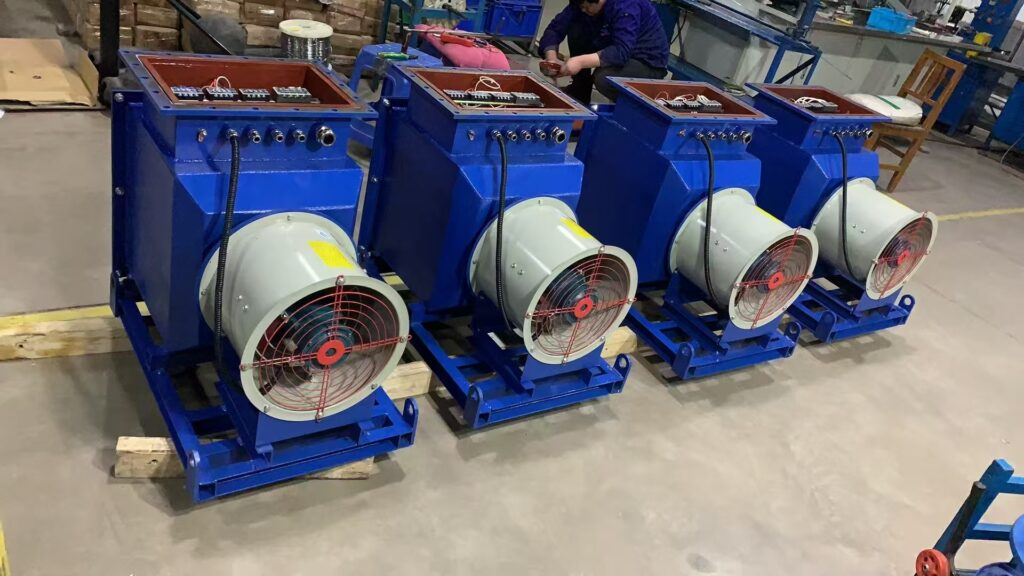
Protection rating: for humid or outdoor environments, the terminal end must be fitted with a watertight gland or explosion-proof junction box.
Temperature control: it is advisable to reserve a thermowell or install a thermocouple (K-type, J-type, PT100) for precise temperature control and to prevent overheating and tube failure.
Closing Remarks
A successful electric heating tube solution balances performance, service life, and cost. As your technical partner, we provide not only the product but also complete solutions ranging from thermal calculations to material selection. If you have a specific heating requirement, please provide the medium type, target temperature rise, and spatial constraints, and our engineers will issue detailed design drawings for your review.