A load-bank element must do more than reach a resistance…

| Focus keyword | flanged immersion heater |
| Meta description | An overview of robust flange-mounted heating assemblies for industrial liquids and gases. |
| Suggested URL slug | flanged-immersion-heater |
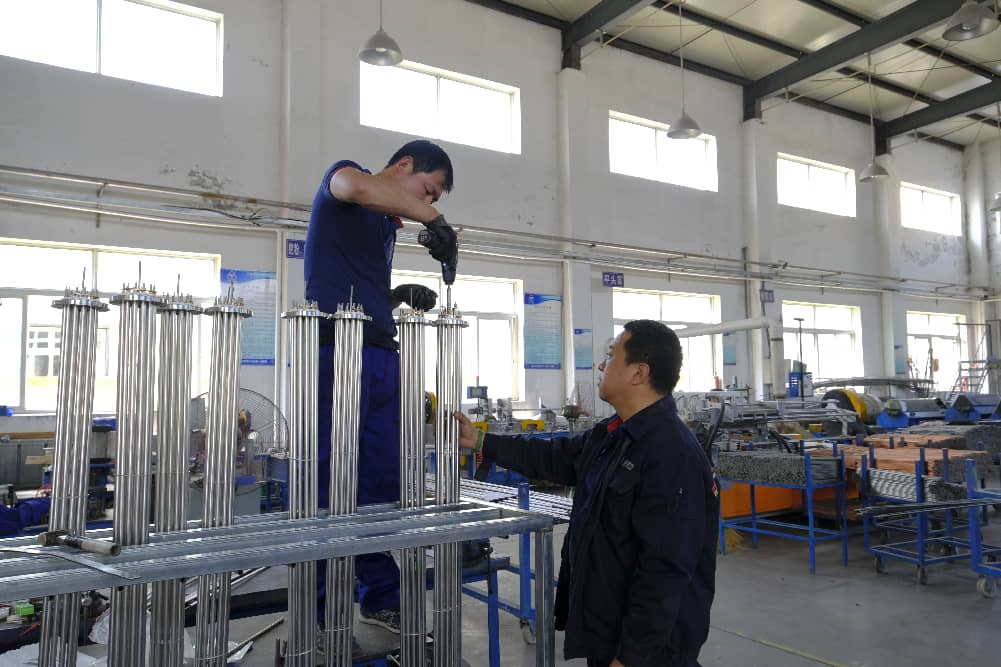
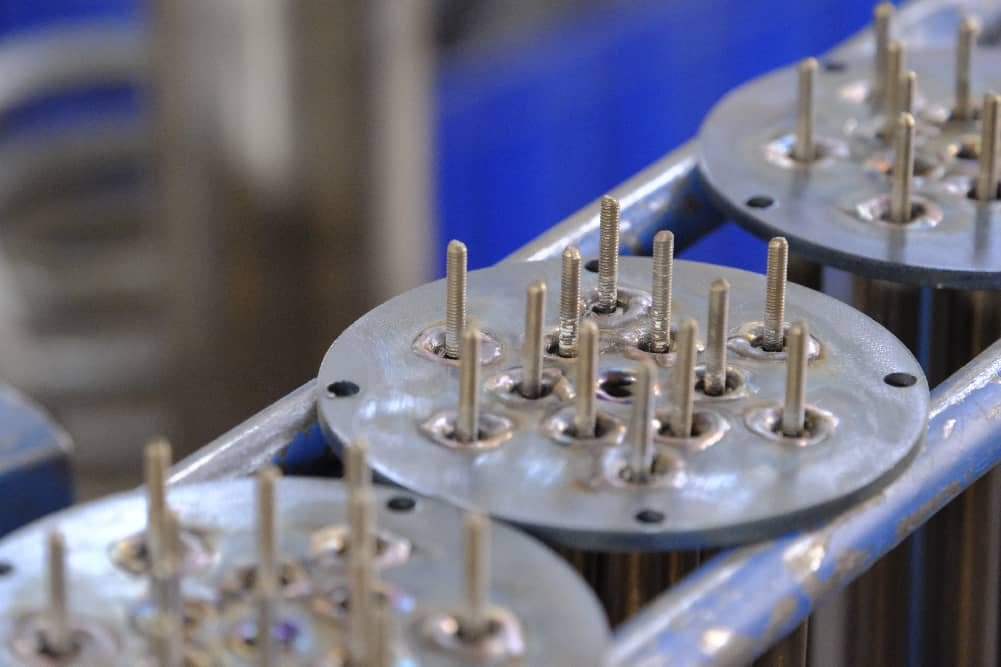
A flanged immersion heater combines multiple tubular heating elements with a process flange, terminal enclosure, and optional sensors. The assembly is inserted into a tank, pressure vessel, or circulation chamber so that heat transfers directly into the medium. This compact arrangement is widely used for water, oils, chemical solutions, gas streams, wash systems, and packaged process equipment.
The flange connection makes the heater suitable for higher-power duties and simplifies removal for inspection. The design can be tailored around flange standard and rating, nozzle size, immersion length, cold zone, element layout, sheath alloy, power, voltage, circuit grouping, terminal orientation, and control philosophy. Baffles or a separate circulation vessel may be used to improve flow distribution and reduce stagnant areas.
Material and watt-density selection are central to service life. Stainless steel is commonly considered for many water and mildly corrosive services, while aggressive chemicals, chloride exposure, high temperature, or contamination limits may require a different alloy. The process engineer should review corrosion data and site experience. For oils and fouling fluids, a conservative surface loading can reduce coking and simplify cleaning.
Runkel supplies customized flanged and boiler immersion heaters for industrial projects. Optional features include thermocouples or RTDs, independent over-temperature protection, multiple power stages, weather-resistant or explosion-protected enclosures, and mating control panels. To prepare a quotation, provide the medium, power or thermal duty, voltage, temperature, pressure, flange specification, insertion length, material requirement, control needs, and applicable codes.
For circulation duties, the heater vessel must distribute flow across the complete element bundle. Excessive velocity can increase pressure drop or erosion, while insufficient or uneven velocity can create hot zones. The chamber diameter, inlet and outlet orientation, internal clearances, and baffle arrangement should be coordinated with the flow range. A vent is normally required at a high point so trapped gas does not expose active element sections.
Flanged heaters can also be designed for easier electrical integration. Separate circuits may support staged control, reduced startup demand, or partial-capacity operation. Terminal enclosures can be oriented to suit cable routing and maintenance access. When a replacement heater is required, supplying the old drawing, nameplate, flange dimensions, insertion length, and photographs can help verify interchangeability before manufacture.
Discuss your application with Runkel. Send the medium or gas composition, flow or volume, inlet and target temperatures, pressure, voltage, installation dimensions, control requirements, and hazardous-area information to info@runkel.cn, or visit www.runkel.cn.